The opening ceremony of the 2026 International Summer School on FPGA, Southeast University, was successfully held in Lecture Hall 63791, Electronics Building, School of Electronic Science and Engineering on the morning of July 17, 2026.Tang Yongming, Party Secretary of Zhongda Hospital Affiliated to Southeast University, Rui Guanghao, Assistant Dean of the School of Electronic Science and Engineering, Li He, Director of the Department of Circuits and Systems, Dong Zhifang, Party Branch Secretary of the Faculty Party Branch of the Department of Circuits and Systems, together with Assistant Professor Tao Min from the School of Electronic Science and Engineering and the School of Integrated Circuits, Jilin University, attended the ceremony. More than 10 students from Jilin University and over 40 students from Southeast University participated in the event. The ceremony was hosted by Sun Hao, Deputy Secretary of the Faculty Party Branch of the Department of Circuits and Systems.
1. Opening Remarks
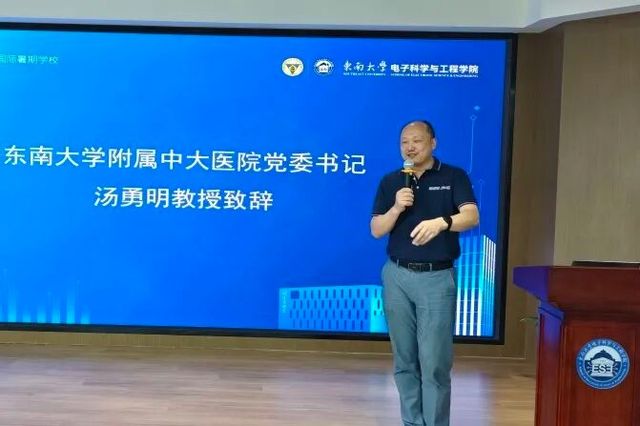
At the start of the ceremony, Professor Tang Yongming delivered a speech. He first extended a warm welcome to teachers and students from Jilin University. Then he reviewed the development of the FPGA Summer School since its founding in 2013 and introduced its distinctive educational features.
He pointed out that as a vital type of digital integrated circuit, FPGA design technology boasts strong vitality and extensive application demands. Professor Tang stated that the International Summer School on FPGA serves to supplement classroom teaching and offer students valuable hands-on practice opportunities. He emphasized its close integration with the SEU PLD Competition and the National University Student FPGA Innovative Design Competition, encouraging students to seize learning opportunities, actively compete, and create outstanding works with practical value.
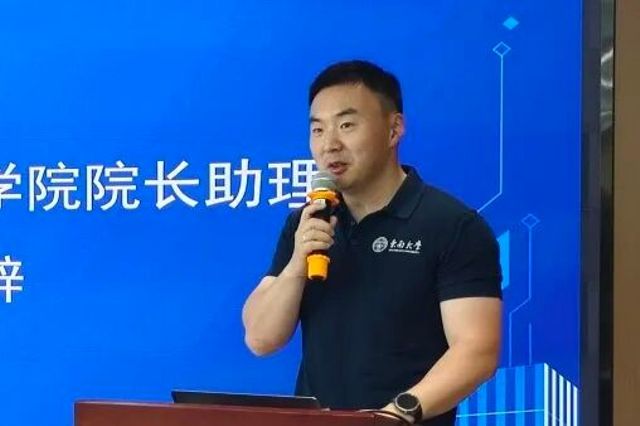
Next, Professor Rui Guanghao took the floor. He noted that the School of Electronic Science and Engineering has long attached great importance to FPGA-related competitions and encouraged student participation. Students can learn FPGA development workflows and relevant design tools through competitions and have achieved fruitful practical results. In closing, he hoped that students would broaden their horizons during the summer school, enhance their capabilities in hardware-software co-design and system debugging, and cultivate teamwork skills.
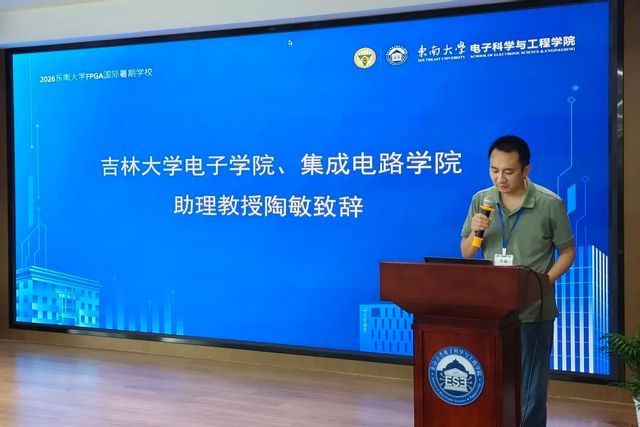
Assistant Professor Tao Min from the School of Electronic Science and Engineering and the School of Integrated Circuits, Jilin University, delivered a speech. He expressed sincere gratitude to Southeast University for its elaborate preparation and warm reception, and spoke highly of the profound academic heritage of Southeast University’s electronic information disciplines.
He remarked that the summer school’s well-structured curriculum covers fundamental knowledge, cutting-edge research, and AI applications, constituting an invaluable learning opportunity. He encouraged all students to make the most of the program and gain substantial knowledge. He also looked forward to taking this summer school as an opportunity to further deepen bilateral cooperation and improve a long-term exchange mechanism between the two universities in teaching and scientific research.
2. Introduction to the Summer School
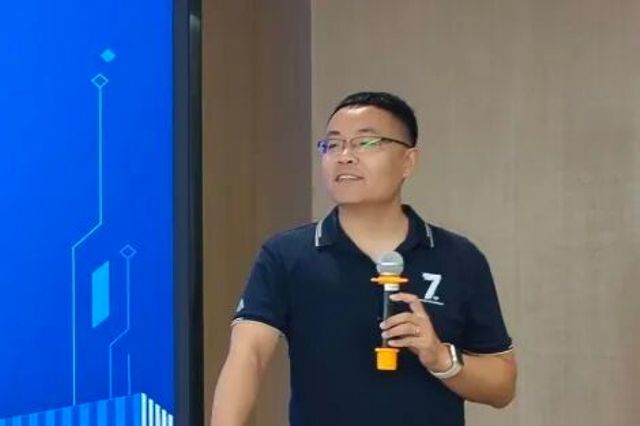
Professor Li He then elaborated on the unique features and schedule of this summer school. He explained that the program adopts a project-based teaching model featuring "training through competitions" and "integrating coursework with contests".
The first phase focuses on consolidating foundational knowledge, guiding students to master Verilog syntax, IP core invocation and simulation verification, as well as schematic and constraint file design for FPGA development boards.
The second phase provides advanced training targeting the SEU PLD Competition, with four competition tracks available: real-time FPGA-based medical image analysis, intelligent vehicles (integrating depth estimation, panoramic image stitching and multi-sensor fusion), LLM-powered automatic HLS code generation, and FPGA-based acceleration of Attention operators. Students are encouraged to delve deeply into one track, conduct in-depth hands-on experiments and iterative scheme optimization, with guidance provided by an experienced team of graduate teaching assistants.
Furthermore, self-study classrooms will be accessible throughout the summer school to ensure all students can consolidate knowledge through hands-on practice.
After introducing the curriculum system, Professor Li He highlighted another major highlight of the summer school: a series of cutting-edge international academic lectures. The program invites professors and researchers from Imperial College London, University College London, the University of Bristol, the University of Southampton and the University of Cambridge to deliver fully English online lectures on frontier technologies including FPGA-AI hardware-software co-design, brain-computer interfaces, quantum computing and quantum key distribution, as well as RISC-V processors, aiming to broaden students’ international horizons.
In partnership with the AMD University Program, the summer school will also carry out teaching activities that leverage large language models for FPGA education and explore agent design workflows, offering students access to cutting-edge industrial technologies.
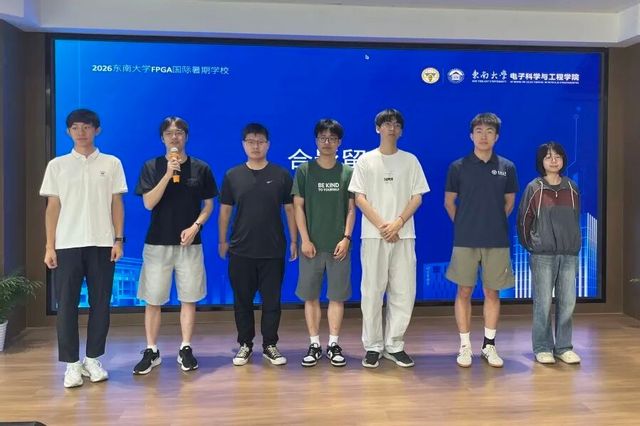
Subsequently, the summer school’s teaching assistant team introduced themselves and stated they would provide full-process technical support and guidance for all participating students.
3. Group Photo Session
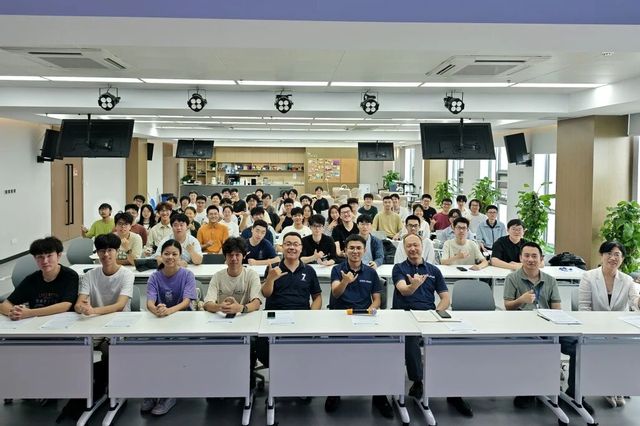
Finally, all attending teachers and students took a group photo to mark the occasion. The two-week International Summer School on FPGA officially kicked off.